
Reconstruction · Implant teeth
New teeth after jaw reconstruction
Rebuilding the bone restores the shape of the jaw. Implant-supported teeth restore chewing, speech, appearance and confidence — where our implant expertise completes the reconstruction.
Planning for the teeth starts before the reconstruction surgery
On this page
On this page
Overview
Rebuilding the jaw is half the job; new teeth complete it.
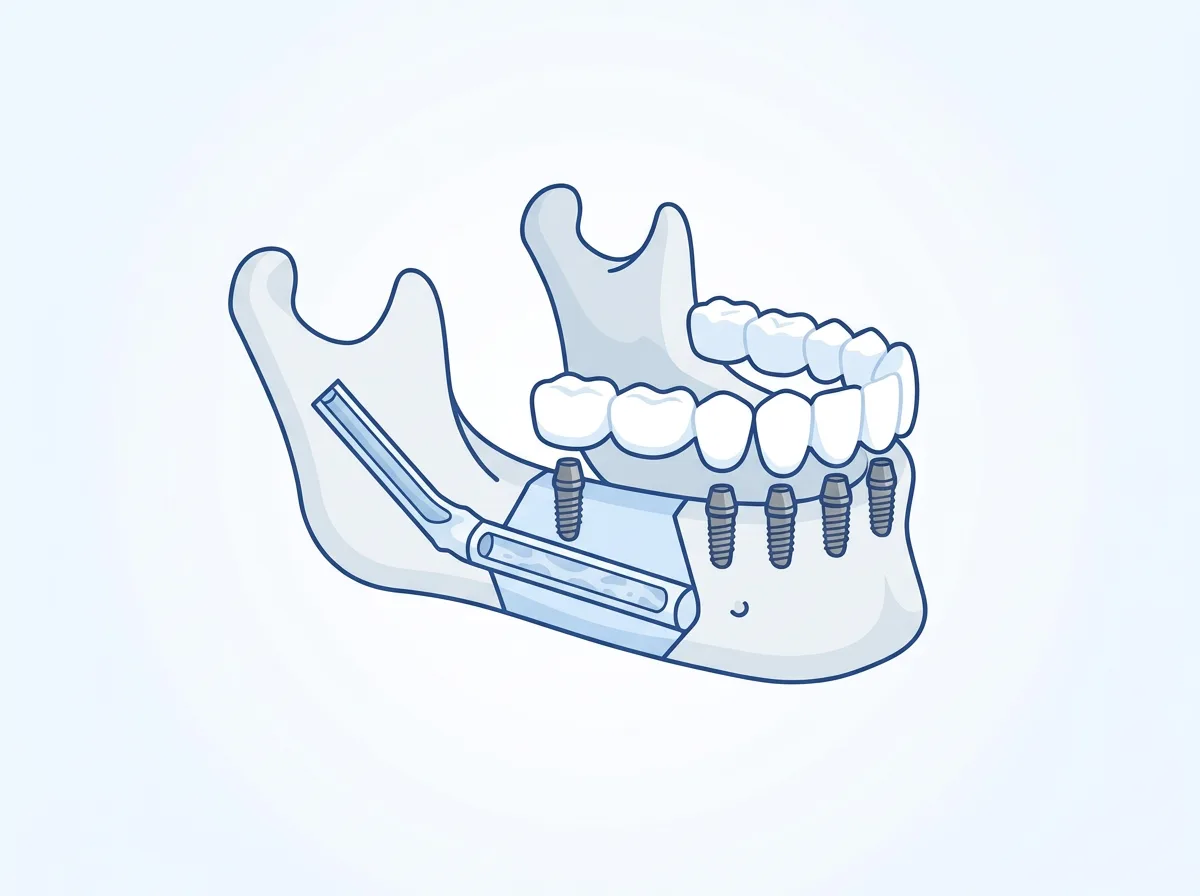
After a tumor is removed or a severe injury is treated, a fibula or iliac crest flap restores the continuity of the jaw and the contour of the face. Bone alone is not enough: patients need teeth to chew, speak clearly and smile with confidence.
Implants that fuse with the grafted bone can carry fixed or removable teeth that work far better than a conventional denture.
That is why we plan the teeth before the reconstruction surgery — “prosthetically driven reconstruction”: the position of the future teeth decides where the bone goes.
Virtual surgical planning (VSP)
The operation is rehearsed on screen first.
Surgeons and prosthodontists plan the resection, the graft and the future implant positions together on a 3D model.
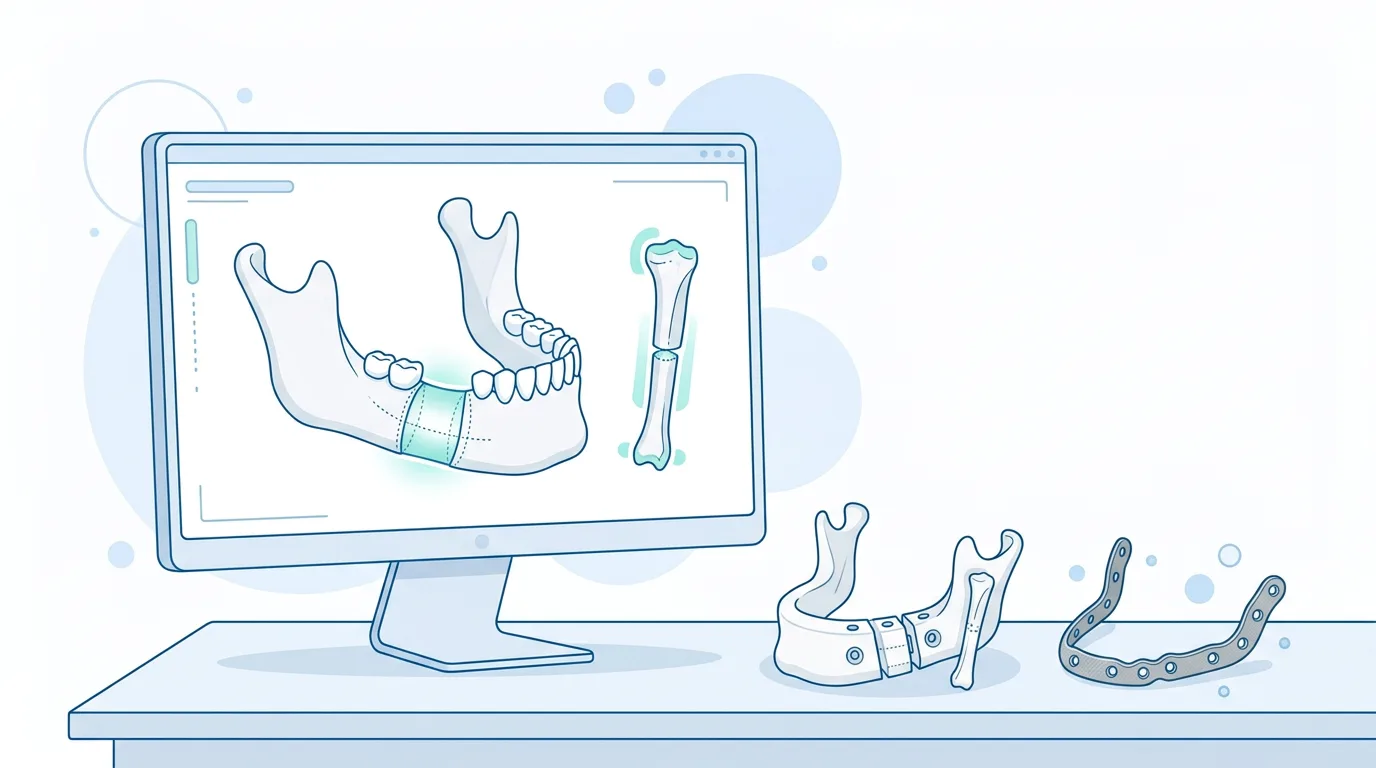
CT scans
Of the jaw and the donor site (leg or hip).
3D model
Scans become a 3D model of the jaw.
Virtual resection & graft
The resection is simulated and the graft positioned to match the future teeth.
3D-printed cutting guides
Transfer the planned bone cuts to the jaw and the donor bone.
Patient-specific plates
Titanium plates, pre-bent or 3D-printed, hold the graft as planned.
Implant guide (optional)
Marks the position and angle of each implant.
Timing of implants
When implants go in depends on your diagnosis and treatment.
Delayed placement
Implants go in once the graft has healed, usually about 3–6 months after reconstruction — longer after radiotherapy.
The most common approach: healing, pathology and any further treatment are confirmed before implants are placed.
Immediate — “Jaw in a day”
Implants, and sometimes a provisional prosthesis, are placed during the reconstruction surgery itself.
Suitable only for benign conditions or carefully selected cases, and it depends on precise 3D planning.
Staged after radiotherapy
Radiotherapy reduces the bone's blood supply and healing, so timing is chosen carefully.
- Some centres consider hyperbaric oxygen in selected cases
- The risk of osteoradionecrosis (ORN) is discussed with you beforehand
Making the bone implant-ready
A graft often sits lower than the original jaw; there are several ways to close the gap.
The fibula is slim, so it often sits below the old ridge, leaving teeth too long or poorly loaded.
Double-barrel fibula
The fibula is folded into two stacked segments to add height.
Vertical distraction osteogenesis
A bone segment is moved up gradually so new bone forms in the gap.
Onlay bone grafting
Extra bone is added on top of the graft to build height.
Longer teeth or pink porcelain
The prosthesis makes up the difference, with gum-coloured porcelain in place of gum.
Soft-tissue management
Implants need thin, firm tissue around them.
Flap skin is thick and mobile, which makes cleaning hard and puts implants at risk.
Thinning the skin paddle
Bulky skin paddles are thinned so the tissue around implants is shallow.
Vestibuloplasty
A split-thickness skin or palatal mucosa graft creates firm keratinized tissue around the implants.
Removing excess tissue
Surplus tissue is removed so the prosthesis fits and cleaning is easier.
Prosthesis options
Fixed, removable or conventional: how the options compare.
| Option | How it is held | Strengths | Consider |
|---|---|---|---|
| Fixed implant bridge Fixed | Screw-retained on implants | Feels most like natural teeth | Needs enough implants and access for hygiene |
| Implant-retained overdenture Removable | Bars, locators or telescopes | Easier cleaning, lower cost | Taken out daily to clean |
| Conventional denture Removable | Rests on soft tissue | No implant surgery | Often not stable after reconstruction |
Step by step
Nine stages, from planning to maintenance.
1 · Planning
CT scans and 3D virtual planning, driven by the future teeth.2 · Reconstruction
The diseased part is removed and the jaw rebuilt with a fibula or iliac crest flap.3 · Healing
The graft heals; radiotherapy, if needed, takes place now.4 · Soft tissue
Skin paddle thinning or vestibuloplasty.-
5 · Guided implants
Implants are placed in the planned positions using a surgical guide.
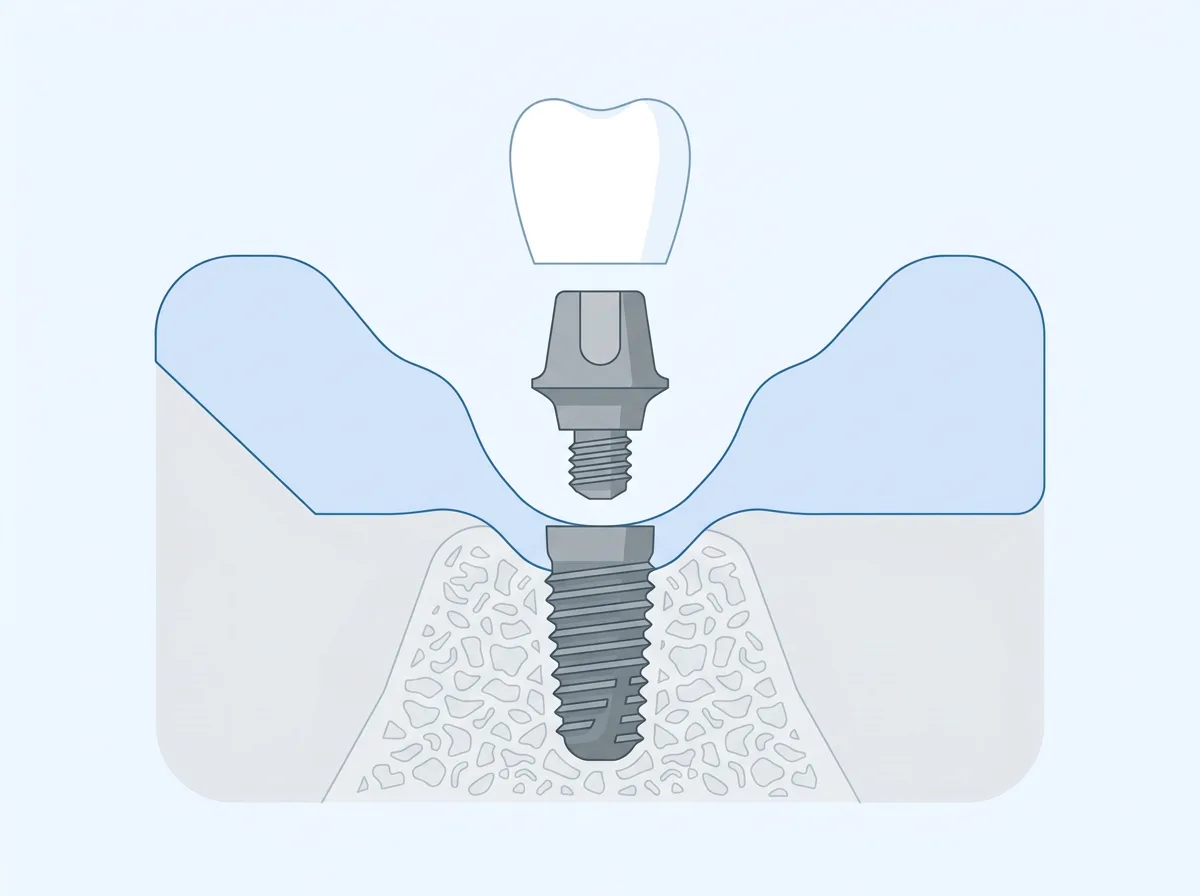
Implant, abutment and crown 6 · Osseointegration
The implants fuse with the bone.7 · Provisional teeth
Temporary teeth test the bite, speech and appearance.8 · Final prosthesis
The fixed bridge or overdenture is made and fitted.9 · Maintenance
Regular reviews and professional cleaning protect the implants for the long term.
Living with implants
Daily care keeps implant teeth working for years.
Daily hygiene
- Interdental brushes
- Single-tuft brushes
- Water flosser
Regular reviews
Maintenance every 3 months at first, with checks for peri-implant inflammation.
After radiotherapy
Fluoride to protect remaining teeth, and care for dry mouth.
FAQ
Questions about new teeth after reconstruction.
Can implants be placed in a fibula or hip bone graft?
Yes. Both are strong bone that can hold implants. The iliac crest offers more height; a fibula sometimes needs extra height first.
How long until I have teeth again?
With delayed placement, implants usually go in about 3–6 months after reconstruction — longer after radiotherapy — followed by osseointegration and the prosthesis stages. In selected immediate cases, provisional teeth can be fitted on the day of reconstruction.
Can I have implants after radiotherapy?
Often yes, with careful timing. Some centres consider hyperbaric oxygen in selected cases, and we discuss the risk of osteoradionecrosis with you first.
Will the new teeth be fixed or removable?
Either. A fixed bridge feels most like natural teeth but needs enough implants and hygiene access; an overdenture comes out for cleaning and costs less.
Will I be able to eat normally?
Most patients chew far better than without teeth or with a conventional denture. How close to normal depends on the extent of surgery, the soft tissue and any radiotherapy.
Specialist clinics
Specialist clinics Mon & Tue afternoons, 2:00–5:00 pm Beijing time
Patients, families and referring dentists are welcome to book a consultation about new teeth after reconstruction.
Book an appointment