01
Assessment
Consultation & CBCT
Examination, medical history and a CBCT 3D scan.
Implant Dentistry · Our lead specialty
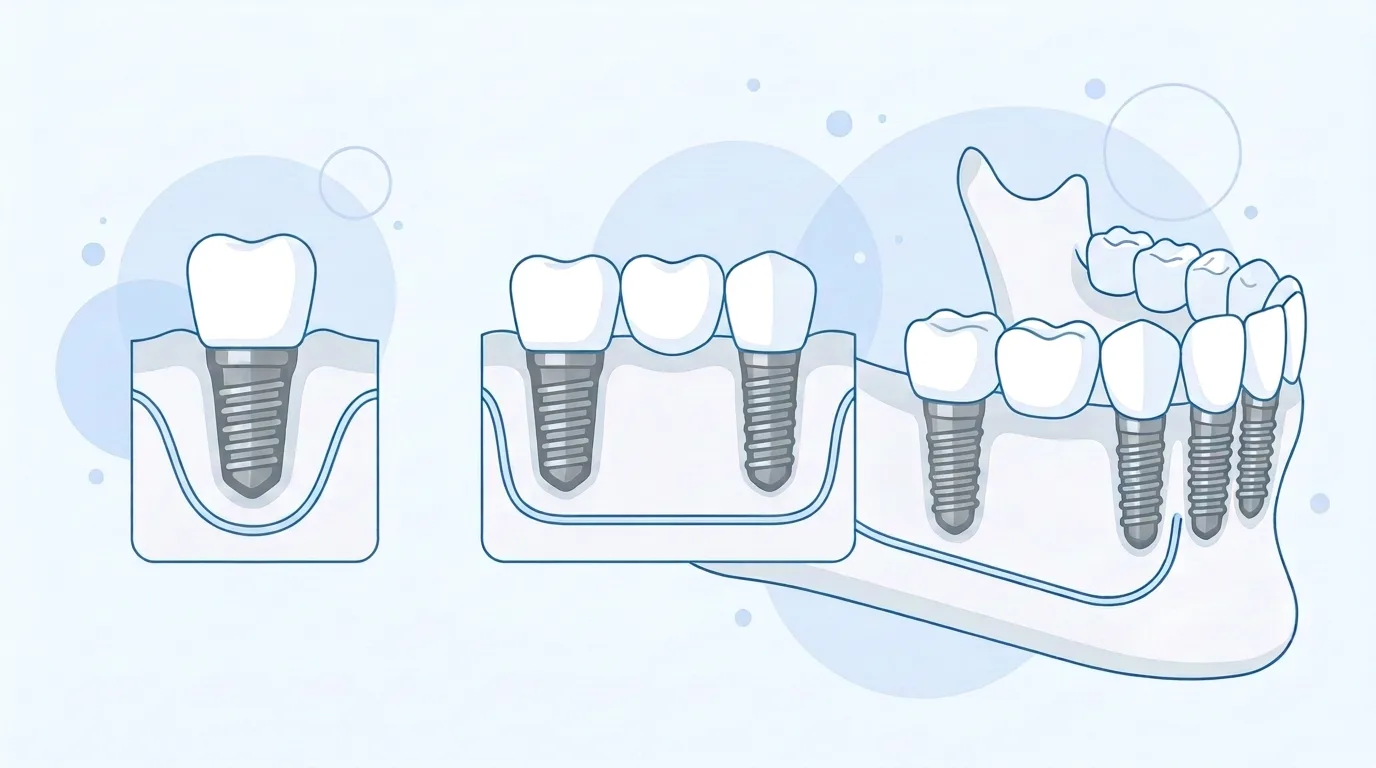
An implant is placed in the jawbone, bonds with the bone, and carries an abutment and crown — replacing one tooth, several, or a full arch.
In practice since 2015 · A subsidiary of Sinica Health Systems
The basics
The fixture is made of titanium (or zirconia) and placed in the jawbone, where bone bonds directly to its surface — osseointegration, first described by Brånemark.
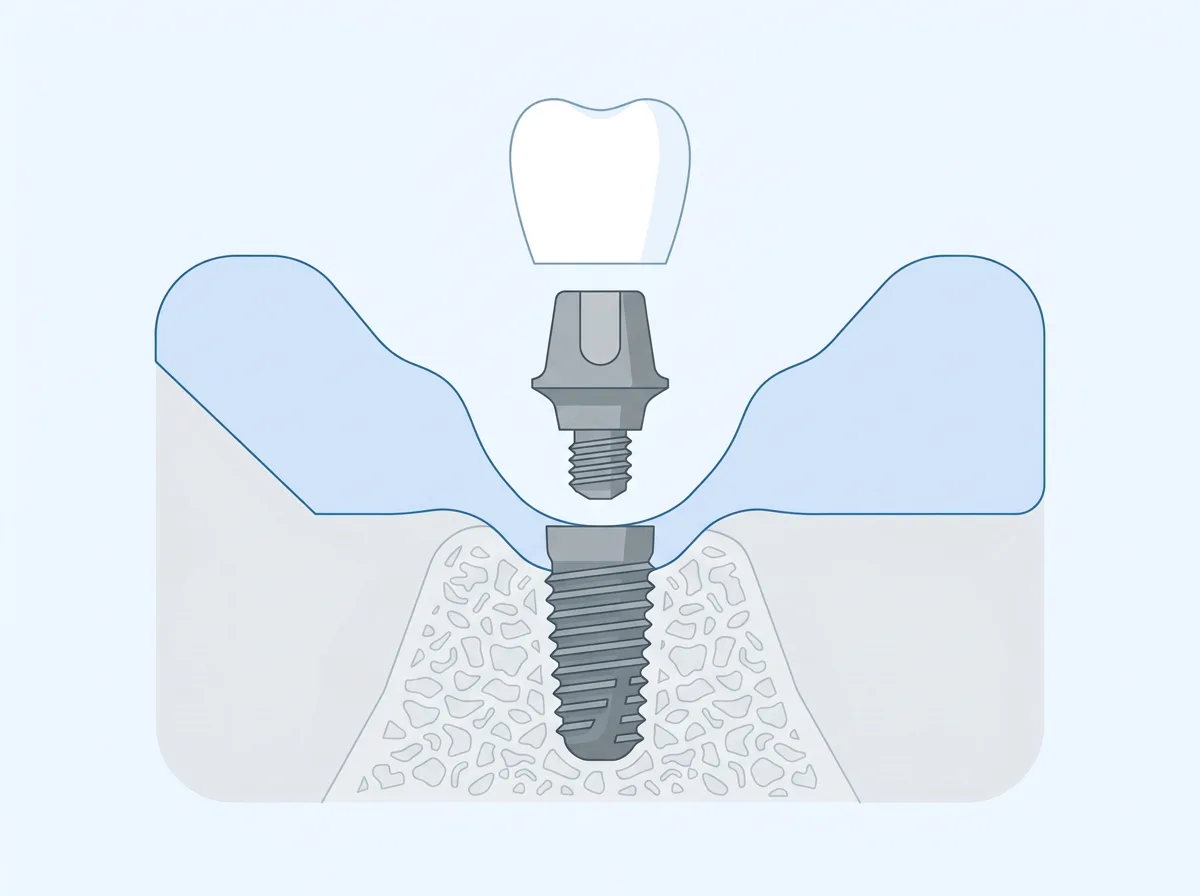
A threaded titanium or zirconia post placed in the jawbone. During healing, bone fuses with it and it becomes the new root.
The connector between fixture and crown, tightened to a precise torque with a torque wrench so the joint stays secure.
The visible tooth, made to match your bite and neighbouring teeth — a single crown, or a bridge carried by several implants.
Comparing options
| Factor | Dental implant | Fixed bridge | Removable denture |
|---|---|---|---|
| Neighbouring teeth | Left untouched | Filed down to support the bridge | Clasps may load the remaining teeth |
| Jawbone preservation | Stimulates the bone when chewing, helping limit bone loss | Bone under the gap continues to shrink | Bone loss continues and may speed up |
| Chewing stability | Anchored in bone, close to a natural tooth | Fixed and stable | Can move; weaker bite |
| Maintenance | Brush like natural teeth, plus interdental cleaning and check-ups | Clean under the bridge with threaders or interdental brushes | Removed daily for cleaning, usually out at night |
| Typical lifespan | Can last decades with good care | Often 10–15 years | Relines/replacement over the years |
Treatment options
One implant and one crown replace one missing tooth. The healthy teeth either side are not drilled.
When several neighbouring teeth are missing, a few implants can carry a fixed bridge — usually fewer implants than missing teeth.
Four to six implants support a full fixed arch of teeth. In All-on-4-style plans, the back implants are angled to use the bone that is there, often reducing the need for grafting.
Two to four implants with attachments hold a removable denture in place — far steadier than a conventional denture, and it still comes out for cleaning.
In selected cases with good bone and firm initial stability, the implant can go in at the time of extraction, or temporary teeth can be fitted the same day. Final teeth follow after healing.
When bone is insufficient
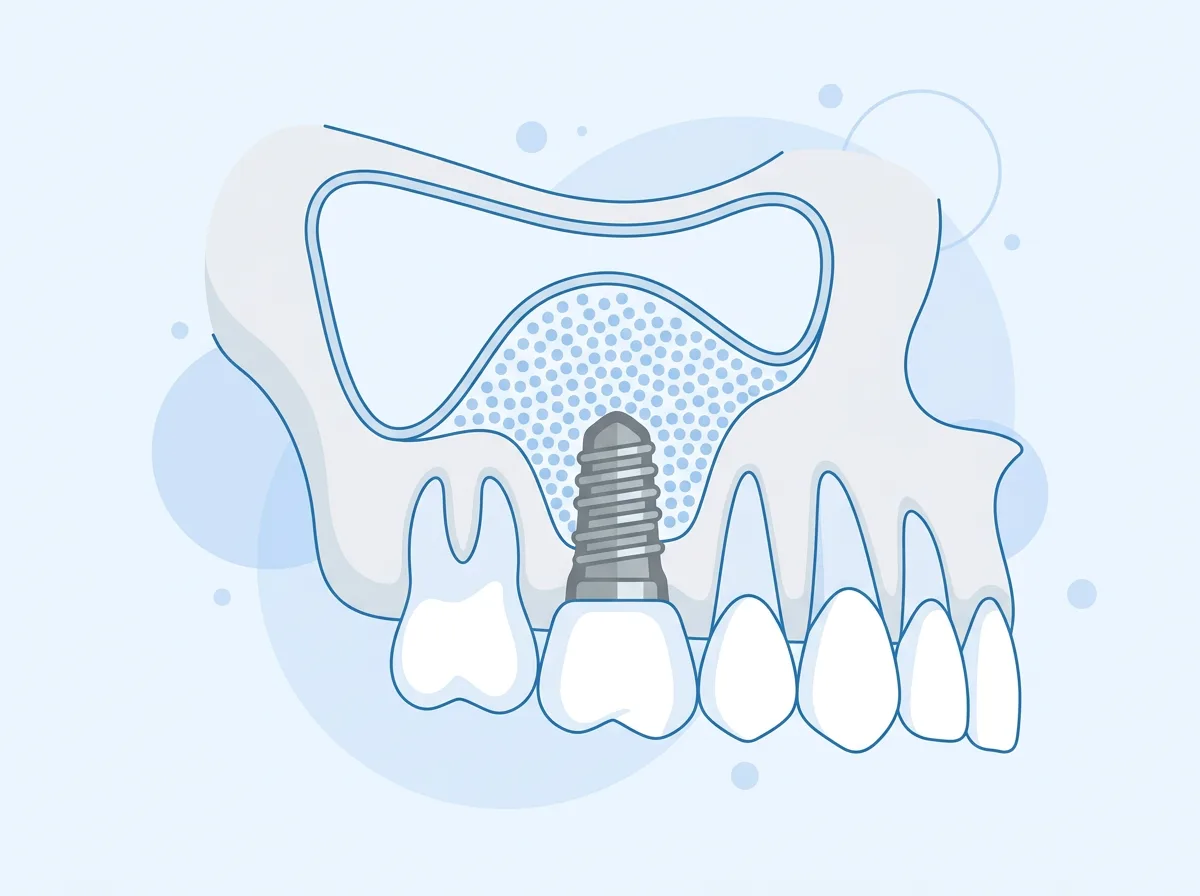
Autograft (your own bone), allograft, or xenograft, often with guided bone regeneration (GBR) membranes, rebuilds width and height.
Where upper back teeth lack height, the sinus floor is raised and grafted through a lateral window or a crestal approach.
A narrow ridge is split and widened to make room for the implant.
In selected cases, short implants, or zygomatic implants anchored in the cheekbone, can avoid extensive grafting.
Digital workflow
Prosthetically driven planning puts each implant where the final tooth needs it.
Shows bone volume, nerves and the sinus.
A digital impression in place of impression paste.
The final teeth are designed first; implants follow.
Carries the plan into the mouth.
Implants go in at the planned position, angle and depth.
Final crowns designed and made from the scan data.
Treatment timeline
01
Assessment
Examination, medical history and a CBCT 3D scan.
02
Planning
Your implant plan, schedule and a written quote.
03
If needed
Removing teeth that cannot be saved, or building up bone first.
04
Surgery
The implant is placed as planned, under local anaesthesia, with sedation if you wish.
05
Healing
Bone bonds to the implant; a temporary tooth can be worn meanwhile.
06
Restoration
The abutment is fitted and your custom crown or bridge goes in.
07
Lifelong
Home care and regular professional check-ups keep the implant healthy.
Candidates & risk factors
These conditions do not always rule implants out, but they call for extra care and planning.
Aftercare & complications
| Condition | What is affected | Reversible? |
|---|---|---|
| Peri-implant mucositis | Inflammation of the gum only | Reversible with prompt cleaning and care |
| Peri-implantitis | Inflammation with bone loss around the implant | Bone loss is harder to reverse; needs specialist treatment |
FAQ
Placement is done under local anaesthesia, with sedation if needed, so you should not feel pain during surgery. Soreness in the following days is usually managed with standard painkillers.
Healing usually takes 3–6 months after placement before the abutment and final crown. Extraction or grafting adds time. Your plan sets out your own timeline.
In selected cases with good bone and firm initial stability, immediate loading lets you leave with temporary teeth the same day. Final teeth follow after healing.
There is no set upper age limit. General health, bone and medicines matter more than age, and we review each at your consultation.
Yes, though uncommonly. Early failure usually means the bone did not bond; later failure is often linked to peri-implantitis or overload. Smoking, uncontrolled diabetes and poor hygiene raise the risk. A failed implant can often be replaced after healing.
Titanium implants are generally MRI-safe, though they can cause image artifacts near the implant. Tell the radiology team about your implants before the scan.
Specialist clinics
Book an implant consultation and we will arrange your examination and CBCT scan.
Book an appointment